
Asbestos Justice has recently recovered compensation in an asbestos claim for Mr Ian Norton of Thame, Oxfordshire who was diagnosed with the asbestos related condition known as “diffuse pleural thickening”.
Before his diagnosis, our client had been suffering with increasing breathing problems which he noticed particularly whenever he exerted himself. We always urge those who have been exposed to asbestos to keep an eye on their breathing symptoms and to seek medical attention to obtain expert advice as to the cause of any increased breathing problems.
Initial thoracoscopy treatment
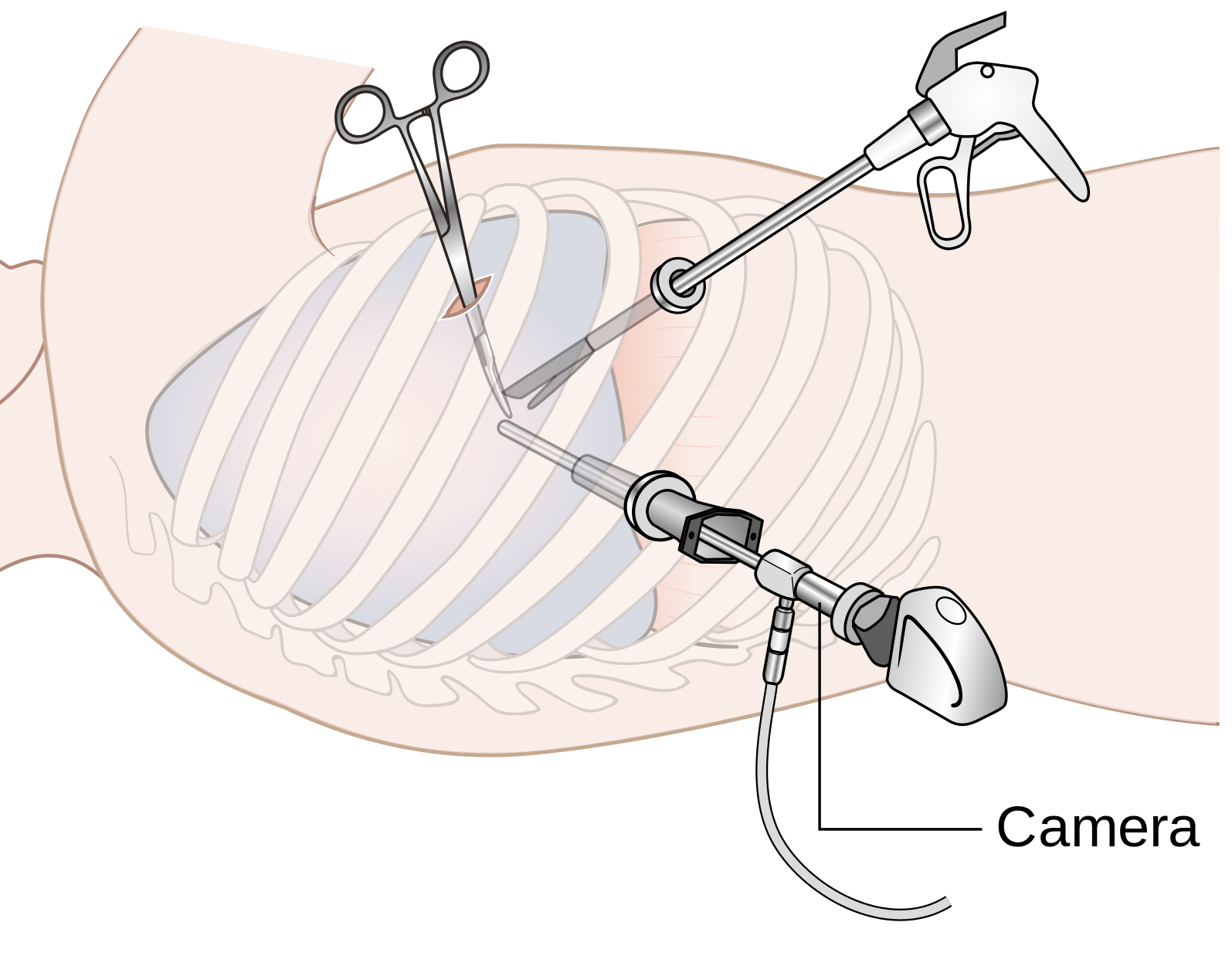
Mr Norton did just that and was sent for a particularly unpleasant procedure known as a thoracoscopy which was completed under general anaesthetic. His treating consultant used an implement inserted through the chest to reach the affected area of the lining of the lung through the ribs and took biopsy samples to test for asbestos related mesothelioma.
Thankfully, the results were returned in the negative for this incurable condition but our client was made aware that he was suffering with breathing problems due to multiple health problems including Chronic Obstructive Pulmonary disease (COPD), caused by smoking, as well as the asbestos related pleural thickening.
Asbestos exposure at 15 years old
Mr Norton confirmed that he was exposed to asbestos dust with three different companies, two of which included Crendon Concrete Limited and Crendon Timber Components Limited based at their Long Crendon site in Buckinghamshire. He was only 15 when he first started work at the Crendon site and he stayed with them for a full 18 months during the 1971/72 and 1972/73 tax years.
The company was a well known building contractor in the county at the time, and was heavily involved in developing agricultural buildings from scratch. The business regularly provided building supplies to farms nationwide.
In order to recover compensation in his asbestos claim, we needed to establish that our client had been exposed to harmful amounts of asbestos dust.
Invaluable evidence builds a strong case
Mr Norton provided helpful evidence in his statement confirming that his job for Crendon Concrete entailed having to load and unload blue asbestos corrugated sheets from and onto the back of lorries. It is accepted by medical professionals that blue asbestos is the most dangerous form of asbestos.
The asbestos sheets would then be transported to various farm building sites to be used in construction. Asbestos was a widely used material in those days as it was a very effective insulating and heat resistant material. It was common knowledge to our client and his colleagues that the sheets were asbestos insulation sheets.
He believes they were used as roof and side cladding to farm barns as well as for roofing and side insulation for various agricultural buildings.
He recalled the asbestos sheets arriving on site in different sizes, measuring from between 4 to 10 feet in length by 3 feet in width. He described the insulation sheets as being quite brittle and parts of the asbestos sheets would regularly break off resulting in some asbestos dust being released into the atmosphere which he and his colleagues inhaled. This is a common history of exposure to the harmful dust in building industry asbestos claims.
Our client did not have cause to cut up the sheets himself but was nearby when they were in the process of being cut down to size. This is known as “passive” exposure to asbestos.
He did suffer exposure to the deadly dust when lifting the sheets onto the back of HGV lorries, to be transported to the various customer sites. He confirmed that the asbestos dust fell down from the sheets as he lifted them onto the back of the lorries.

The shuffling along of the sheets on the back of the lorries resulted in further asbestos dust rising up into the atmosphere which he and his colleagues could not help but inhale. Whilst on the back of the wagon it was a regular occurrence to see the asbestos dust floating around. The asbestos dust covered the floor of each lorry and as they walked through this, further asbestos dust would rise up into the atmosphere which they all inhaled throughout the course of the working day.
Even though this type of exposure seems light in comparison to other forms of asbestos exposure such as lagging pipes or removing asbestos insulation, it was still considered by the examining medical expert to have contributed to the development of our client’s condition of asbestos related pleural thickening.
This was also the case in respect of the later asbestos exposure he suffered when working on the Crendon Timber Components side of the business. The timber section measured around half the size of a football pitch and was full of workers carrying out various activities.
Exposure to airborne asbestos at work
Our client was employed as a jig assembler and would work on roof trusses made from wood. He would have to climb up onto the jig to fix pieces of pre-cut timber into position to create “A” shaped structures. They were being formed to create roof structures.
The pieces of timber would be fixed into place and would be transported down the line into a press machine which would clamp them into position. He could be working on hundreds of pieces of timber each day. The timber press area filled around one third of the building and the other two thirds were filled by other workers carrying out various forms of cutting.
Once again, whilst this type of work did not bring our client into contact with asbestos directly, there was work going on under the same roof which did expose him to airborne asbestos dust throughout the course of the working day. The business was also involved in making various sectional parts for buildings which had to be fireproofed for health and safety purposes.
Throughout the course of the working day, asbestos insulation boards were in the process of being cut with hand saws and electric saws by 2 or 3 workers positioned around 15 to 20 feet away from where our client attended to his duties.
As the workers cut through the asbestos insulation boards, asbestos dust would rise up into the atmosphere which all workers under the same roof inhaled. Our client could remember seeing clouds of asbestos dust billowing up into the atmosphere. This was the same for wood dust as timber was being cut in the same area.
He experienced this type of passive exposure to asbestos on a daily basis when working on the timber section for Crendon during his 6 months with the company.
Never provided with any form of mask for protection
Mr Norton was never provided with any form of mask by the Crendon companies to protect him from breathing in asbestos dust nor was he ever warned of the dangers of being exposed to asbestos dust.
He was just a young lad, doing what he was told and at no time during the course of his time with the company did he feel he was being exposed to danger.
Tracing insurers proved tough but successful thanks specialist knowledge and detailed evidence
This asbestos claim was complicated by the fact that insurance coverage could not be located for our client’s first period of exposure with the Crendon companies.
However, using our specialist knowledge, we were able to locate cover for the later period and the insurers eventually admitted that they exposed our client to harmful amounts of asbestos dust, based on his detailed account.
The medical evidence confirmed that our client was left with a 10% level of respiratory disability due to his asbestos related pleural thickening out of a total respiratory disability of 50%.
Whilst the level of compensation our client was able to recover in his asbestos claim was relatively modest in comparison to other asbestos claims, no price can be put on the peace of mind we were able to secure for him.
Possibility of developing mesothelioma
The expert confirmed in his medical report that our client’s asbestos exposure had left him with a risk of suffering with more serious levels of respiratory disability due to pleural thickening. He also faced a risk of developing the incurable asbestos related cancer known as mesothelioma.
His claim was settled on what is known as a “provisional damages basis” which leaves the door open for our client to claim further asbestos disease compensation if he were to have the misfortune of suffering with more serious asbestos related problems in the future.
Mr Norton said :-
“Asbestos Justice have been a total Godsend to my family and I. When I was diagnosed with an incurable asbestos related illness, I didn’t know who to turn to. Thankfully, I spoke to a specialist solicitor there on day one and they dealt with my claim from start to finish.
They always kept me informed and I was delighted not only to receive compensation for my asbestos related condition but also appreciate the peace of mind they have secured on my behalf. I do worry about what the future holds but if my health were to deteriorate, I know that my legal team at Asbestos Justice will be there to recover more compensation on my behalf when I need it most.
I cannot thank them enough for what they have done for me and am happy to tell others about my story and their excellent level of service.”